2026-04-04
Big Soda's Recycling Promises Don't Fix Your Office Water Problem
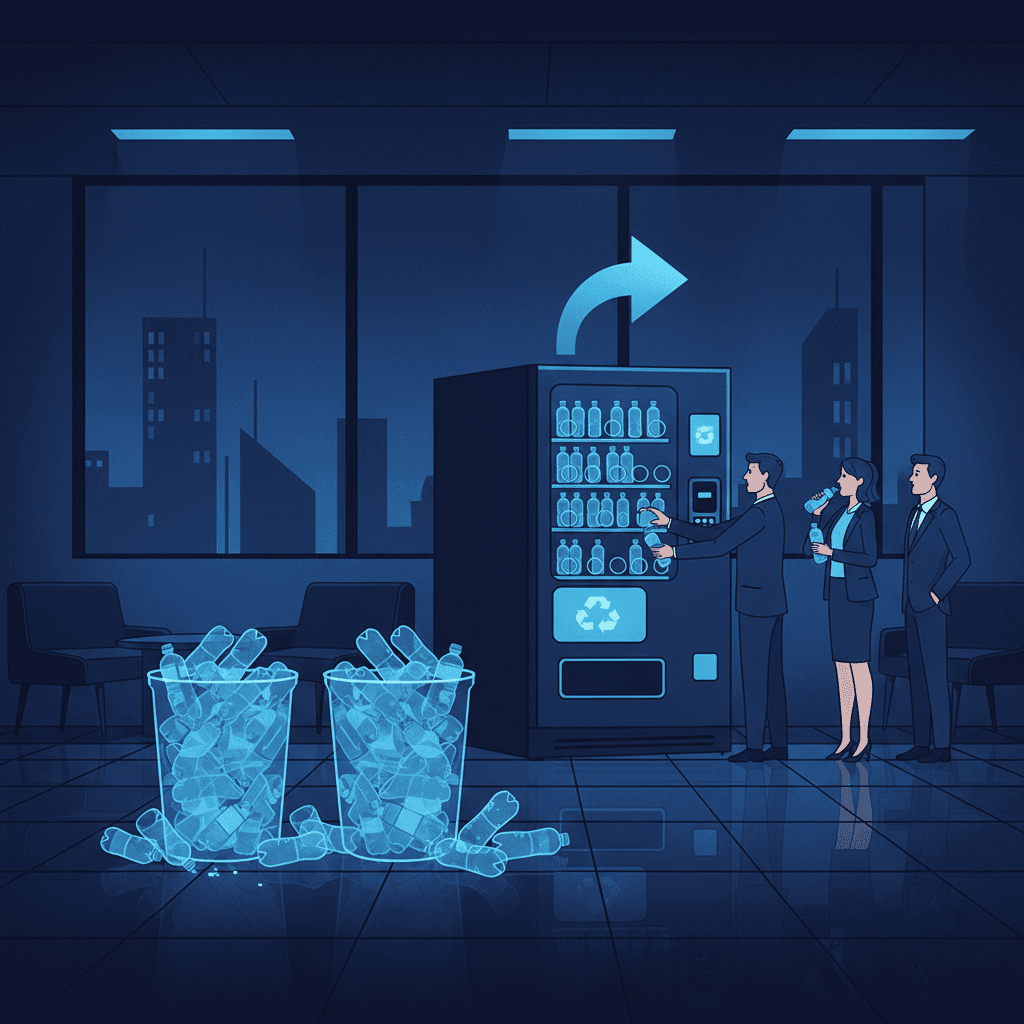
Coca-Cola once promised to collect and recycle a bottle for every one it sold by 2030. PepsiCo promised to cut virgin plastic and put a fifth of its servings in reusable packaging.
Update, September 2026: both have since walked it back. In December 2024 Coca-Cola replaced the one-for-one collection goal with 70-75% by 2035, and its recycled-plastic target with 30-35%. In May 2025 PepsiCo dropped its reuse target, moved to a 2% a year cut in virgin plastic through 2030, and pushed 40% recycled content out to 2035. The rest of this post reads the way it did when I wrote it; the argument got stronger, not weaker.
Sounds great. But walk into any office breakroom and count the plastic bottles in the recycling bin. Then count how many employees grabbed bottled water in the last hour.
The math doesn't work.
The Corporate Promise Problem
I sell water systems for a living. I'm biased. But I also see the numbers.
These companies are making promises about what happens after you buy their products. Not about reducing how many products they sell you. There's a difference.
Coca-Cola's plan is to help collect "the equivalent number" of what they sell. That's accounting, not reduction. They can sell you bottles and collect different bottles from somewhere else. Mission accomplished.
PepsiCo's virgin plastic reduction sounds better. But 2% a year still means most of every new bottle comes from new plastic. And it doesn't cap how many total bottles they produce.
Your Breakroom Reality Check
Most offices use multiple cases of bottled water per day. That's dozens of bottles every day.
Even with perfect recycling (which doesn't exist), you're still creating demand for new plastic production. The bottles might get recycled into carpet or park benches, but they rarely become new bottles.
And perfect recycling is a fantasy. EPA's most recent figure puts the PET bottle recycling rate at 29.1% (2018). The other seven in ten go to landfills or worse.
The Water Quality Angle
Here's what nobody talks about: most bottled water isn't better than what comes from your tap.
The EPA regulates more than 90 contaminants in public drinking water systems. That includes everything from bacteria to heavy metals to chemical byproducts.
Bottled water companies follow FDA rules, which are less strict than EPA standards for tap water. They test less frequently. They disclose less information.
But tap water has its own problems. The EPA's revised Lead and Copper Rule requires water systems to replace lead service lines within 10 years if levels exceed action levels. That's progress, but it takes time.
PFAS chemicals are another concern. EPA finalized enforceable limits on six PFAS in April 2024, with compliance due in 2029, and in May 2026 proposed pushing that to 2031 and dropping four of the six. So the rule exists, but the water in your building will not be held to it for years.
A Different Math
Point-of-use water systems filter what you already have. No trucks delivering plastic. No recycling theater. No hoping that corporate promises match reality.
One system can replace thousands of bottles per year. The environmental math is simple: less stuff is better than recycling more stuff.
Most offices I walk into in Wisconsin are paying a monthly jug bill plus a case of bottles from Costco on top. A point-of-use system replaces both line items with one, and the water comes from the same Madison aquifer without the trucks.
The Promise vs. The Purchase
Corporate sustainability announcements make good headlines. They don't change what happens in your breakroom tomorrow.
Big Soda will keep making bottles as long as people keep buying them. Their recycling promises are damage control, not demand reduction.
You can wait for perfect corporate behavior, or you can solve the problem at your office. The choice is simpler than the marketing makes it seem.