2026-04-27
4 Parts Per Trillion: The New Water Standard Most Offices Don't Know About
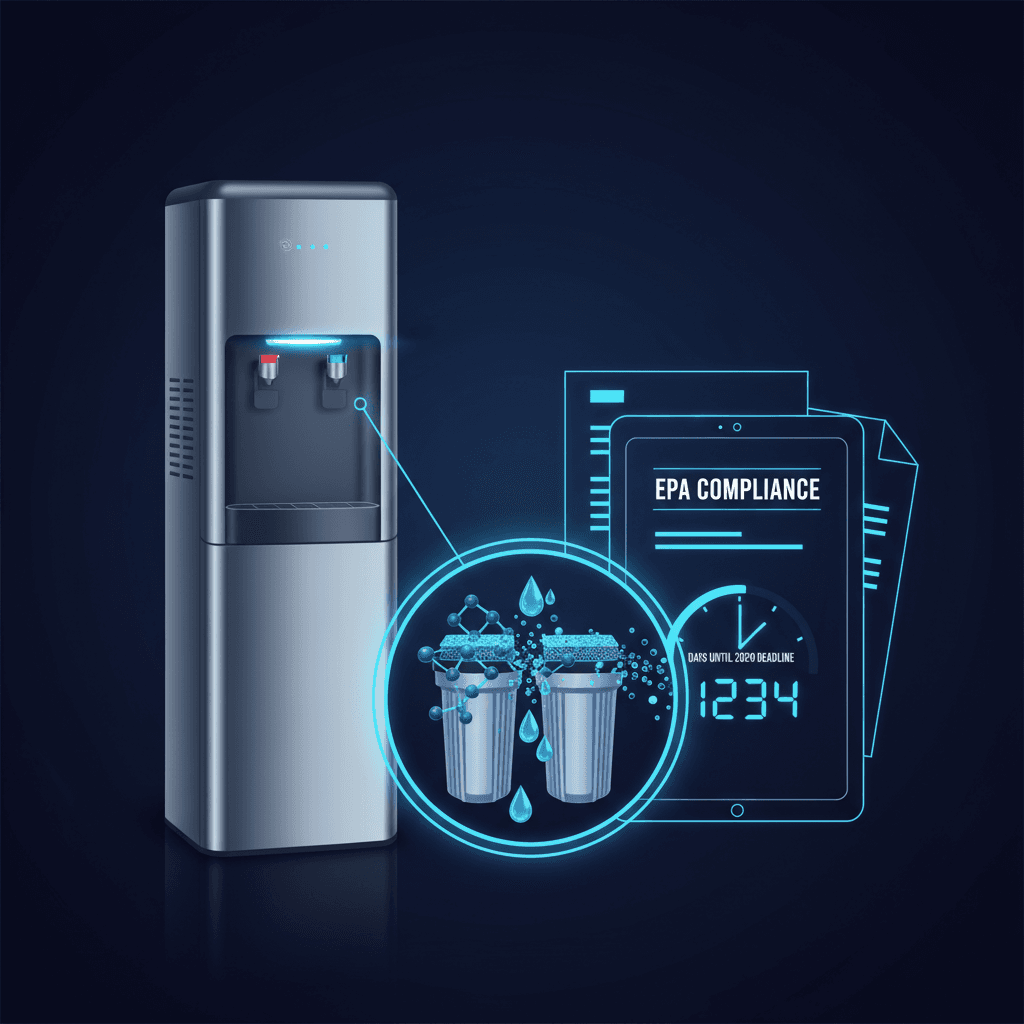
Four parts per trillion.
That's the new EPA limit for PFAS chemicals in drinking water. To put that in perspective, four parts per trillion is roughly one drop of food coloring in five Olympic-size swimming pools.
The EPA finalized these standards on April 10, 2024, requiring public water systems to monitor for six PFAS chemicals and hold PFOA and PFOS to 4.0 ppt each. Water utilities have until 2029 to comply — or 2031, if a May 2026 EPA proposal to let systems request two more years is finalized. The 4.0 ppt number itself is not changing. (That last part is a September 2026 update to this post.)
Most offices have no idea this is coming.
The Math Is Wild
The new standard sets maximum contaminant levels for PFOA and PFOS at 4 parts per trillion each. For context, EPA's 2016 lifetime health advisory was 70 parts per trillion for the two combined — the new limits are more than seventeen times tighter for the pair.
The EPA estimates the rule will reduce PFAS exposure for approximately 100 million people, prevent thousands of deaths, and reduce tens of thousands of serious illnesses.
But here's what caught my attention: the EPA estimates between 6-10% of the 66,000 public drinking water systems in the United States may need to take action to meet these new standards.
That's potentially thousands of water systems serving offices across the country.
Your Office Might Be Affected
Full disclosure: I work in the water industry. I sell bottleless water systems. But the data doesn't lie.
A 2023 U.S. Geological Survey study found that at least 45% of the nation's tap water has one or more types of PFAS. The detection rates were higher in urban areas and the Great Plains.
If your office is in a city, there's a significant chance your tap water contains PFAS. And with the new 4 parts per trillion standard, what was "acceptable" yesterday might not be compliant in 2029.
Three Years Isn't Long
Water system upgrades don't happen overnight. The utilities that need to make changes have three years to figure out treatment, testing, and compliance. That sounds like a lot of time until you consider the scale of infrastructure changes needed.
Madison shows what the upgrade looks like at utility scale: PFAS turned up at Well 15 in 2017, the well was shut down in 2019, and it came back online in September 2025 behind a $5.9 million activated carbon and ion exchange plant. Six years, one well.
Some offices won't wait for their municipal system to upgrade. They'll install point-of-use filtration that can handle PFAS removal right at the tap.
Others will stick with bottled water and hope their supplier is testing properly.
The Real Question
Here's what I keep thinking about: if 4 parts per trillion is the new safety standard, what does that say about what we've been drinking?
The EPA didn't pull this number out of thin air. They set it based on health risk assessments and the best available science. If that's the level needed to protect public health, it means the previous standards weren't protective enough.
Your office team drinks water all day. They make coffee with it. They fill water bottles from the tap. If your municipal system is one of those that needs upgrades, that's three more years of exposure while they figure it out.
The math on PFAS detection is getting more precise every year. The health research is getting clearer. And the standards are getting stricter because they need to be.
Four parts per trillion isn't just a number. It's the new reality for what "safe" drinking water means in America.