2026-04-26
PFAS Found in Much of America's Tap Water. Your Office May Be Affected.
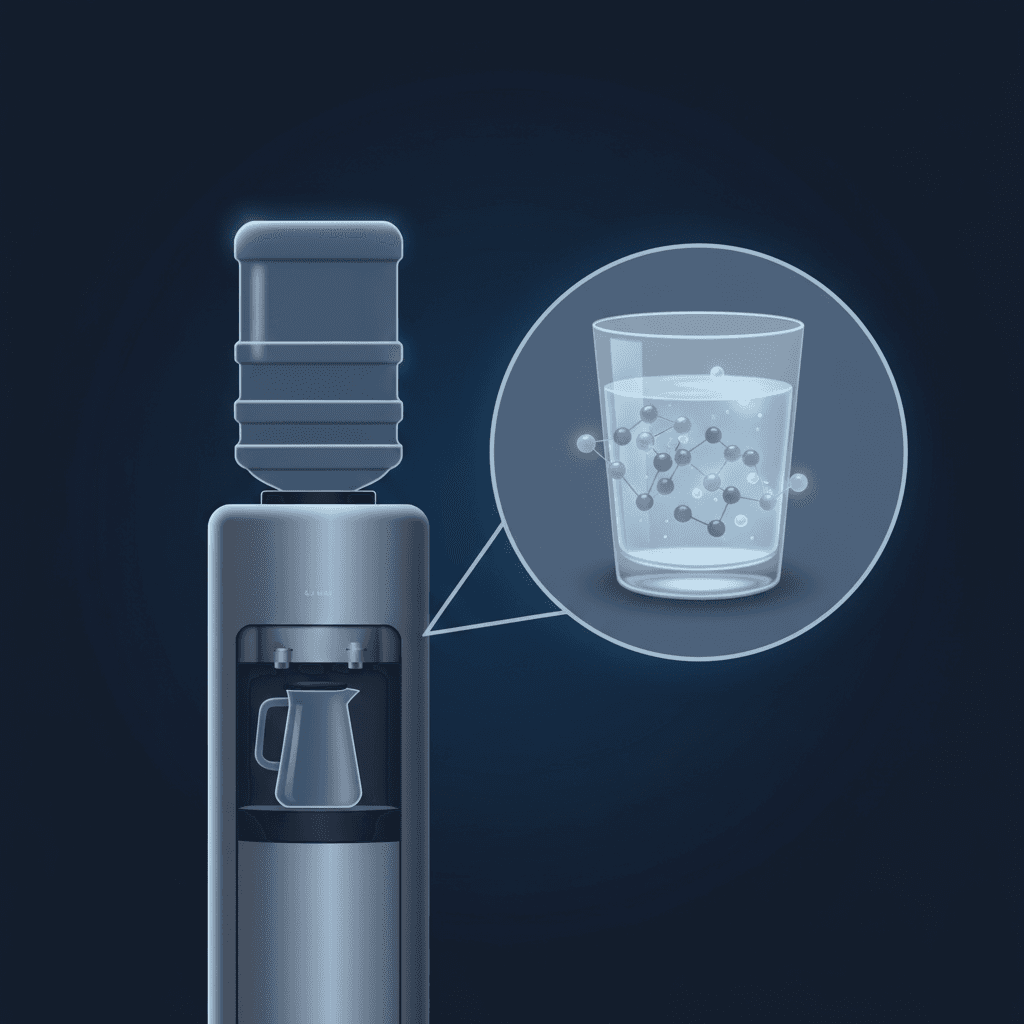
I sell water systems for a living. So when the U.S. Geological Survey found that at least 45% of the nation's tap water is estimated to contain one or more PFAS, I paid attention.
This represents widespread contamination across American buildings.
Your office may be getting PFAS water.
The Numbers Don't Lie
The USGS study sampled taps at 716 locations between 2016 and 2021 — 269 private wells and 447 public supplies — and tested for 32 of the more than 12,000 known PFAS compounds. The agency put the odds of finding no PFAS at roughly 25% in urban areas and 75% in rural ones.
These aren't naturally occurring chemicals. They're man-made. They don't break down. That's why they call them forever chemicals.
And they may be in your office water cooler.
The EPA has identified PFAS contamination in public water systems nationwide. But there are thousands of PFAS chemicals. The real contamination rate is likely much higher than basic testing reveals.
Your Timeline Is Tighter Than You Think
Here's what's coming. On April 10, 2024 the EPA finalized the first national drinking water standards for PFAS: public systems must monitor for six PFAS chemicals and hold PFOA and PFOS to 4.0 parts per trillion each, with initial monitoring done by 2027 and treatment in place by 2029. Four parts per trillion is about one drop in five Olympic swimming pools.
Update, September 2026: in May 2026 EPA proposed letting systems request until 2031 to comply and separately proposed rescinding the limits for PFHxS, PFNA, GenX and the mixture rule. The 4.0 ppt limits for PFOA and PFOS are the part nobody has proposed touching. Final action on both was still pending when I checked.
If your local system tests above those limits, they have to fix it — on whichever deadline survives.
What This Means for Your Office
Most offices don't know what's in their water. They assume municipal water is safe because it meets basic standards. But full PFAS testing is relatively new.
Your building might be decades old. Your pipes might be even older. Your water source has been collecting PFAS that entire time.
Madison is the local proof this is real, not hypothetical: Well 15 was shut down over PFAS in 2019 and came back online in September 2025 behind a new activated carbon and ion exchange plant. One well, six years.
The fix isn't cheap for municipalities. Rate increases are coming. System upgrades take years. Some smaller systems might struggle to meet new deadlines.
The Math Is Simple
Widespread contamination. Your office uses municipal water. You may be getting PFAS.
You can wait for your utility to complete testing. Hope they pass. Hope they don't need years to fix problems.
Or you can control your water quality now.
I'm biased — I install water purification systems. But the data doesn't care about my bias. Much of American tap water has forever chemicals that weren't supposed to be there.
Your team drinks that water every day.
Recent studies change everything. It's not about bad water systems in specific places. It's about widespread contamination across the entire country.
What Happens Next
Municipal testing and compliance requirements are rolling out over the next several years. Results will determine which systems need upgrades. Systems that fail will need time to comply.
That's a lot of moving parts. A lot of time for problems.
Your office doesn't have to wait. Point-of-use treatment certified for PFAS — NSF/ANSI 53 for carbon and ion-exchange filters, NSF/ANSI 58 for reverse osmosis — takes it out before it reaches your team. No deadlines. No compliance gaps. No rate increases.
The forever chemicals are already here. The question is what you're going to do about it.
If your office is in Wisconsin: I cover the Madison area for Bottleless Nation. I'll test what's coming out of your tap and show you the numbers before you decide anything — see bottleless water coolers in Madison or get in touch.