2026-04-21
Americans Drink 16.4 Billion Gallons of Bottled Water. Look at the Energy Math.
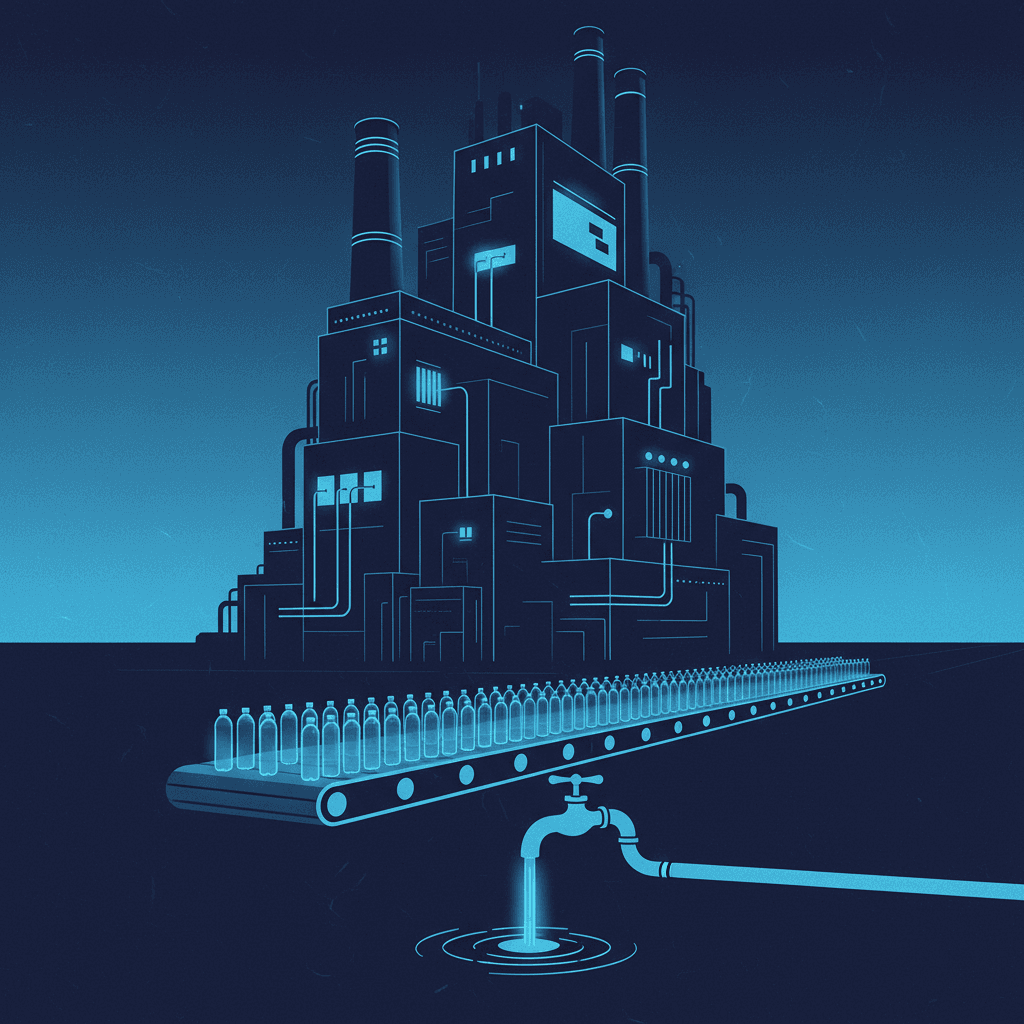
Beverage Marketing Corporation put 2024 US bottled water volume at 16.4 billion gallons — 47.3 gallons per person, $50.6 billion at retail, and the number one beverage in the country by volume for the ninth year running.
The energy behind it is not a rounding error. IBWA's own benchmarking puts production at 0.21 megajoules per litre of finished bottled water, before a single truck moves. Municipal tap water is delivered for a tiny fraction of that.
Let me be clear upfront — I work in the water industry. I help offices switch from bottled to bottleless water systems. But the environmental impact of bottled water production is well-documented.
The Real Cost of Your Office Water
Think about your breakroom. Twenty people grabbing bottles throughout the day. That's maybe 40-50 bottles daily. Seems small, right?
Wrong.
Your office is part of a system that consumes far more energy than necessary. Every bottle represents extraction, purification, packaging, shipping, refrigeration, and disposal. All to deliver something that could come from your existing water line with basic filtration.
The math gets worse when you scale it. 16.4 billion gallons is about 62 billion litres; at 0.21 MJ each that is roughly 13 petajoules of production energy a year, and that figure stops at the plant gate. It excludes the trucks, the warehouses and the refrigeration.
Why This Matters for Your Business
Most companies track energy costs obsessively. LED lights, efficient HVAC, Energy Star equipment. Then they ignore the massive energy multiplier sitting in their breakroom.
I see this pattern everywhere. CFOs who optimize every line item but miss significant energy waste in the building. It's hiding in plain sight because we've normalized bottled water as "just how offices work."
Your bottled water delivery isn't just expensive. It's an energy black hole.
The Simple Fix Nobody Talks About
Bottleless systems connect to your existing water line. Add filtration, purification, maybe carbonation. You get better water than most bottles deliver, but without the excessive energy consumption.
The installation takes hours, not weeks. The energy footprint drops dramatically. Your team gets unlimited water instead of rationing bottles.
But here's what really matters: you stop participating in a system designed to waste energy. Every office that switches removes demand from the massive bottled water cycle.
The Bigger Picture
This isn't just about your office bills. It's about a market that convinced us to pay dramatically higher energy costs for something we already have.
The bottled water industry continues growing because offices keep buying in. Every purchase order is a vote for the current system. Every bottleless installation is a vote against it.
Your office energy strategy should include your water strategy. Because right now, you're consuming far more energy than necessary to serve water.
Even using the industry's own energy figure — 0.21 MJ per litre, measured inside the plant, excluding transport — you are buying an energy-intensive product to get an outcome your wall already delivers.
That's not efficiency. That's waste with better marketing.
If your office is in Wisconsin: I cover the Madison area for Bottleless Nation. I'll test what's coming out of your tap and show you the numbers before you decide anything — see bottleless water coolers in Madison or get in touch.