2026-04-21
The Bottleless Water Market Is About to Hit $3 Billion
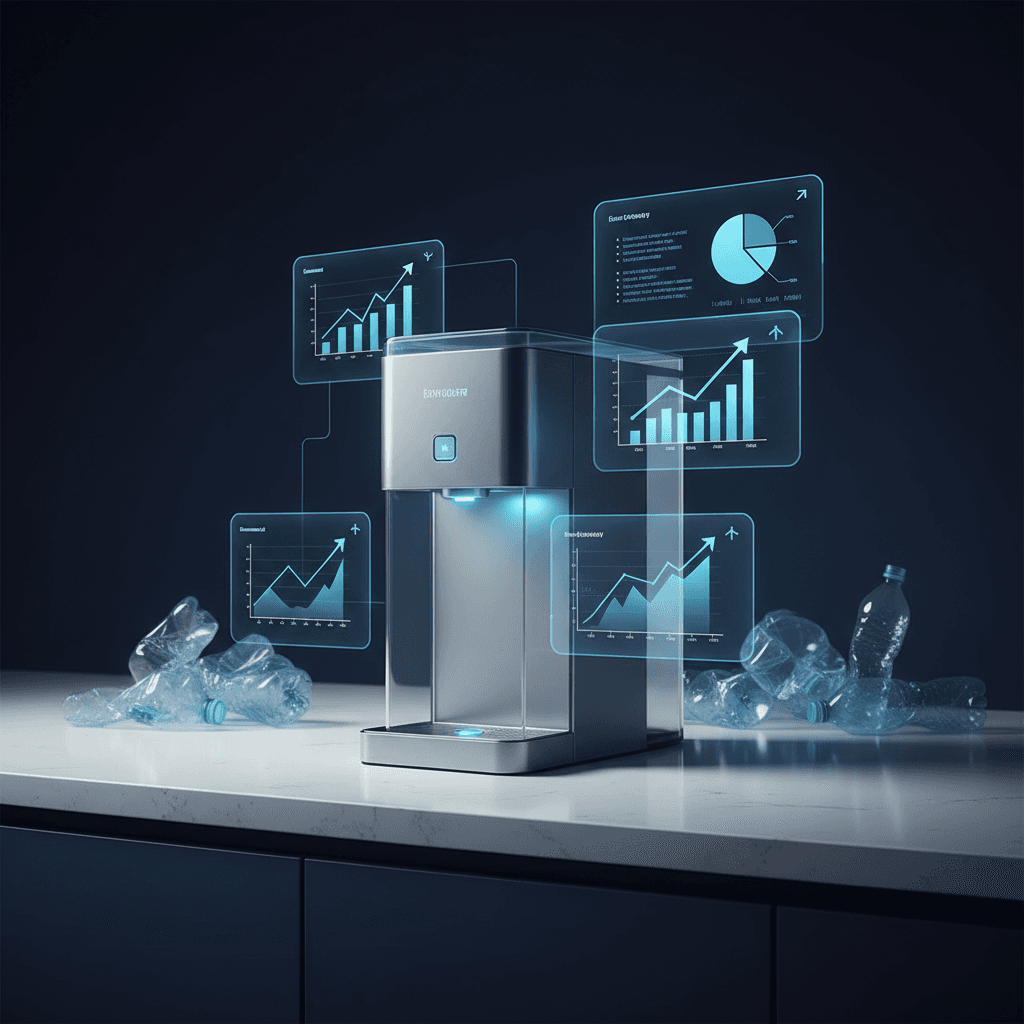
The point-of-use water cooler market was valued at about $1.82 billion in 2023 and is forecast to reach roughly $3.23 billion by 2030, a compound growth rate near 8.5%, according to commercial market research.
Treat that as a direction, not a fact. These are paid vendor forecasts, the underlying methodology isn't public, and estimates for "bottleless" range from under $700 million to over $3 billion depending entirely on where the analyst draws the category line. The agreement between them is on the growth rate, not the total.
Full disclosure: I sell these systems. But the market shift isn't because of what I'm saying — it's because of what the math is saying.
The Plastic Problem Has a Dollar Amount
The dollar case is straightforward and I won't dress it up with a statistic I can't source: you stop paying per bottle and start paying a flat rate for a line you already have.
The waste case has real numbers behind it. Americans went through 16.4 billion gallons of bottled water in 2024, and EPA's figures put PET bottle recycling at 29.1%. Whatever your office contributes to that, a point-of-use system takes it to zero — the container becomes a cup someone washes.
Why Everyone's Making the Switch
The fastest-growing segment isn't bottled delivery anymore. It's point-of-use systems. Companies are connecting directly to their water lines instead of scheduling deliveries.
The reasons are obvious when you think about it:
- No storage space needed
- No delivery scheduling
- No running out of water
- No plastic waste management
I see this shift every day in the field. Decision makers aren't asking if they should go bottleless. They're asking when.
The Quality Question Nobody's Talking About
Here's what really drives the market change: water quality control.
With bottleless systems, you control the filtration. You know what's being removed. You can test the output yourself.
With bottled delivery? You're trusting someone else's process. Someone else's quality control. Someone else's testing schedule.
More companies want that control in-house.
The Infrastructure Reality
The bottleless market growth isn't just about preference. It's about infrastructure reality.
Office buildings already have water lines. They already have electrical. Adding point-of-use filtration uses existing infrastructure instead of working around it.
Bottled delivery requires storage space, handling equipment, and waste management systems. Bottleless requires a connection point.
The math favors the connection.
What This Means for Your Office
The market is moving because the fundamentals changed. Cost, convenience, and control all favor point-of-use systems now.
The growing market size isn't just industry growth. It's validation that this shift is real and permanent.
Your office will make this transition eventually. The question is whether you'll be early or late to a market trend that's already decided.
The numbers suggest early is better.
If your office is in Wisconsin: I cover the Madison area for Bottleless Nation. I'll test what's coming out of your tap and show you the numbers before you decide anything — see bottleless water coolers in Madison or get in touch.