2026-04-08
Your Brain Needs Water. Your Office Isn't Delivering It.
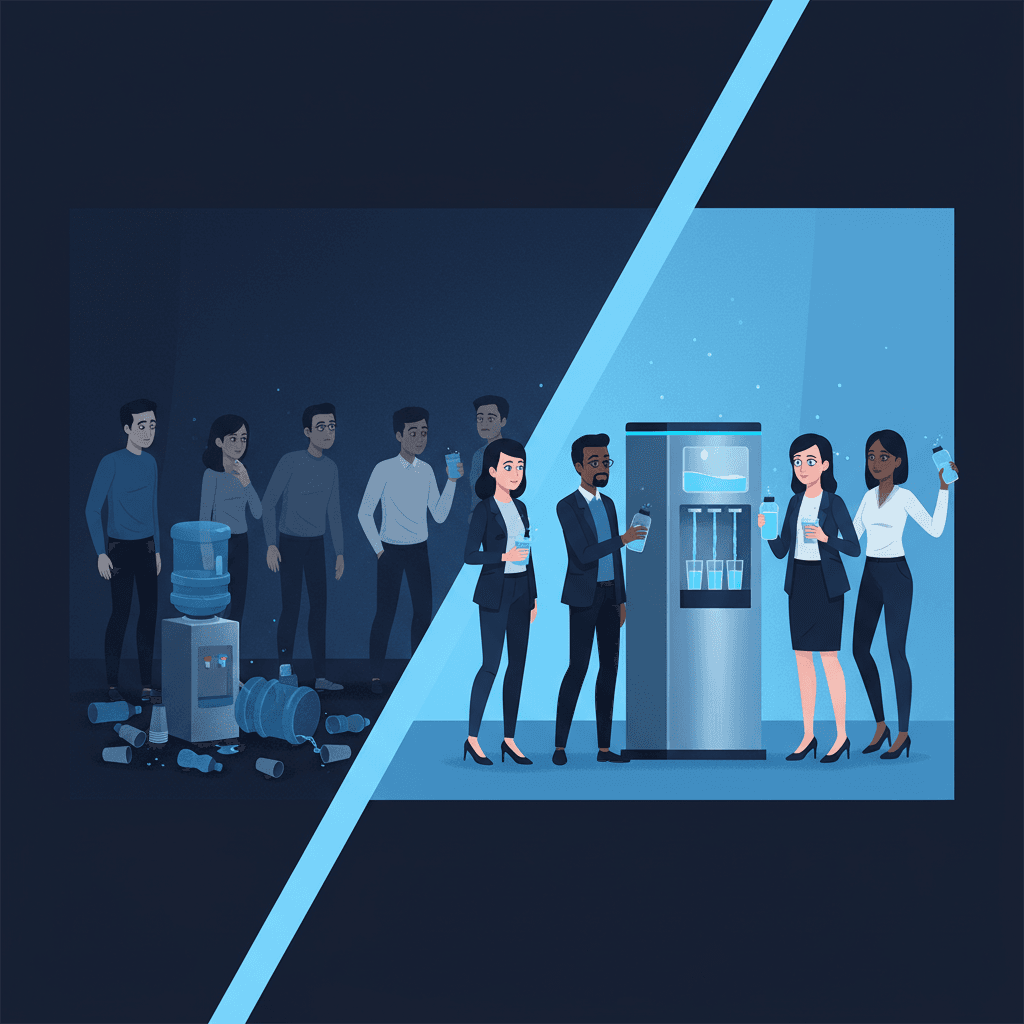
Your 2 PM brain fog might not be the post-lunch crash. It might be that you have not had water since the coffee at 8.
What the research actually measured
Two controlled studies from the University of Connecticut's Human Performance Laboratory are the ones worth knowing.
In the first, published in the British Journal of Nutrition in 2011, 26 men were dehydrated by an average of just 1.59% of body mass. At that level, errors on a visual vigilance task increased, working memory slowed, and fatigue and tension rose. The subjects were not thirsty in any dramatic way; 1.5% is the kind of deficit you reach by skipping water through a busy morning.
In the companion study on women, published in the Journal of Nutrition in 2012, a deficit of about 1.36% body mass degraded mood, raised perceived task difficulty, and lowered concentration.
Harvard's Nutrition Source summarizes the broader literature the same way: even low-level dehydration can cause fatigue and affect mood and mental clarity.
Slower working memory. More errors. Worse mood. From a deficit small enough that you would not notice it.
The office hydration problem
I sell water systems, so I am biased. But the studies above were not run by anyone in my industry.
Most offices treat hydration like parking spots, something you figure out on your own. A cooler in the corner. Maybe some bottles in the fridge. Good luck staying hydrated through back-to-back meetings.
Why the typical setup fails
Distance kills habit. If water is not on the way to somewhere you already go, people grab coffee instead. Or nothing.
Taste drives quantity. Warm tap water with a chlorine edge gets drunk less than cold, filtered water. In Madison the tap water is safe and very hard, 18 to 20 grains per gallon by the utility's own FAQ, and hardness is the thing people taste.
Supply gaps break the habit. A 5-gallon jug that ran out on Tuesday and gets replaced Thursday is two days of people not drinking.
What good office hydration looks like
The setups that work share a few things:
- More than one access point, so nobody walks across the building for water.
- Cold, filtered water that people actually want to drink.
- Always on. Plumbed to the line, not waiting on a delivery truck.
- Options. Sparkling or hot for the people who will not drink plain still water.
The bigger picture
Better hydration will not fix bad management or a toxic culture. But the research says a 1.5% deficit costs attention and working memory, and most offices make reaching that deficit the default.
The question is not whether hydration affects cognitive performance. It is whether your office setup helps or hurts.