2026-04-20
Your Office Wellness Program Is Backwards
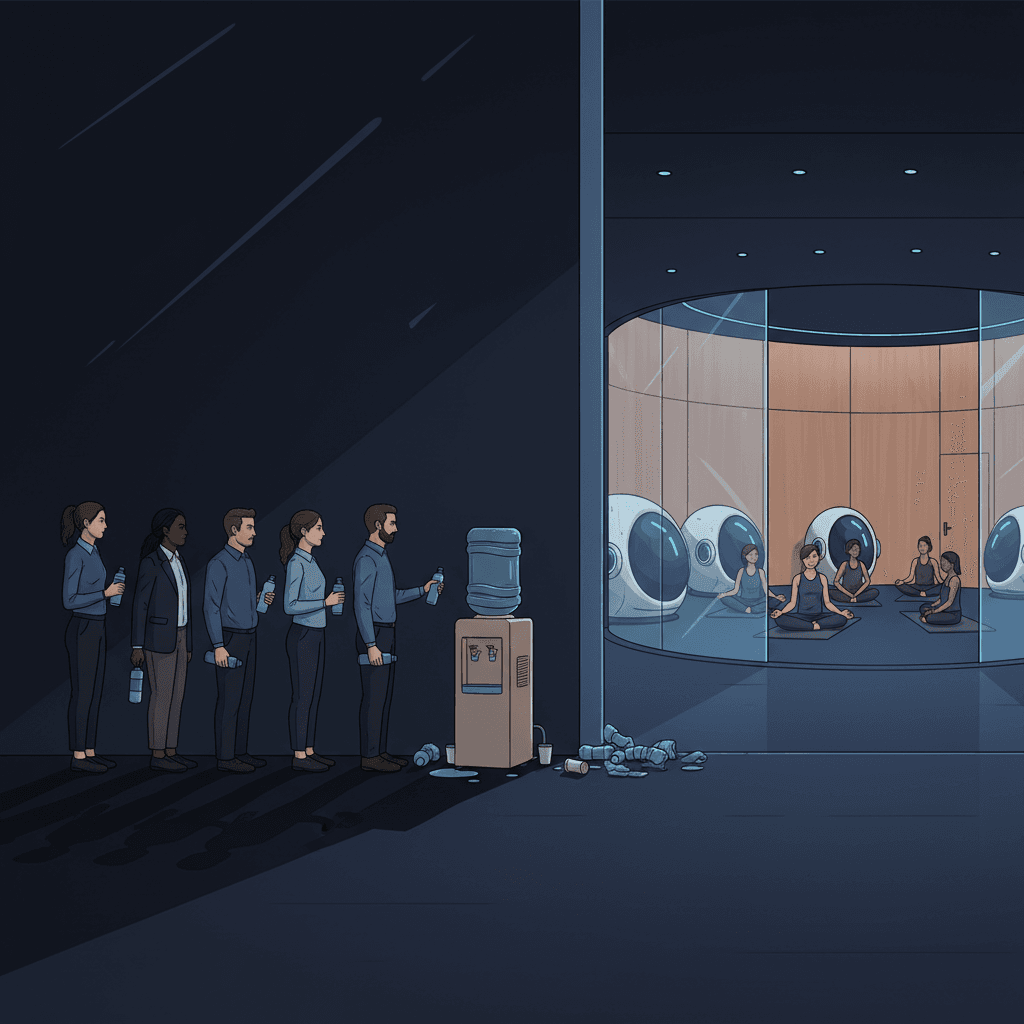
Your HR team spent thousands on a meditation room. Meanwhile, your team drinks from plastic bottles all day.
Something is backwards here.
I sell water systems for a living, so yes, I am biased. Here is the evidence anyway.
The wellness math that actually matters
The biggest randomized trial of a workplace wellness program, published in JAMA in 2019, followed 32,974 employees across 160 worksites for 18 months. People at the wellness sites said they exercised more. But the study found no significant differences in clinical health measures, health care spending, absenteeism or job performance.
The programs that showed those results were the classic ones: nutrition, fitness, stress. Things that need people to opt in and keep showing up.
Water needs nobody to opt in. People drink it every day, every hour, whether or not there is a program.
What your team actually wants
I walk into offices every week. Same pattern everywhere.
The fancy wellness room sits empty. The water situation is a mess. Cases of bottles in a closet, a jug that ran out on Tuesday, and half the team walking around with an empty bottle because they gave up.
Your wellness program tracks steps. Your team's brains are running low on the one input that controlled studies say matters: a fluid deficit of about 1.5% of body mass is enough to increase errors and slow working memory, and it happens before anyone feels thirsty.
The sustainability blind spot
Here is where it gets really backwards.
Your company probably has sustainability goals. Carbon neutral by some year. Zero-waste initiatives. The works.
Americans drank 16.4 billion gallons of bottled water in 2024, by the bottled water industry's own count, and the EPA puts the PET bottle recycling rate at 29.1%. Seven in ten of the bottles in your breakroom bin are headed for a landfill.
But the meditation room is the wellness investment.
The water math your CFO should see
Producing bottled water takes 5.6 to 10.2 MJ per litre, most of it in making the bottle, according to Gleick and Cooley's 2009 analysis. Tap water treatment and delivery runs about 0.005 MJ per litre. You are paying for that energy, plus the truck, plus the closet space, every month.
One change removes the whole line: a cooler plumbed to the wall with a filter in it. No cases, no jugs, no bin.
What actually works
I am not saying meditation rooms are bad. If people use it, keep it.
But when your team cannot get cold, clean water without planning ahead, you have skipped the foundation. The companies that get this right are not the ones with the fanciest programs. They are the ones where good water is just there.
That is not backwards. That is basic.