2026-04-18
Your Team's Brain Fog Might Just Be Thirst
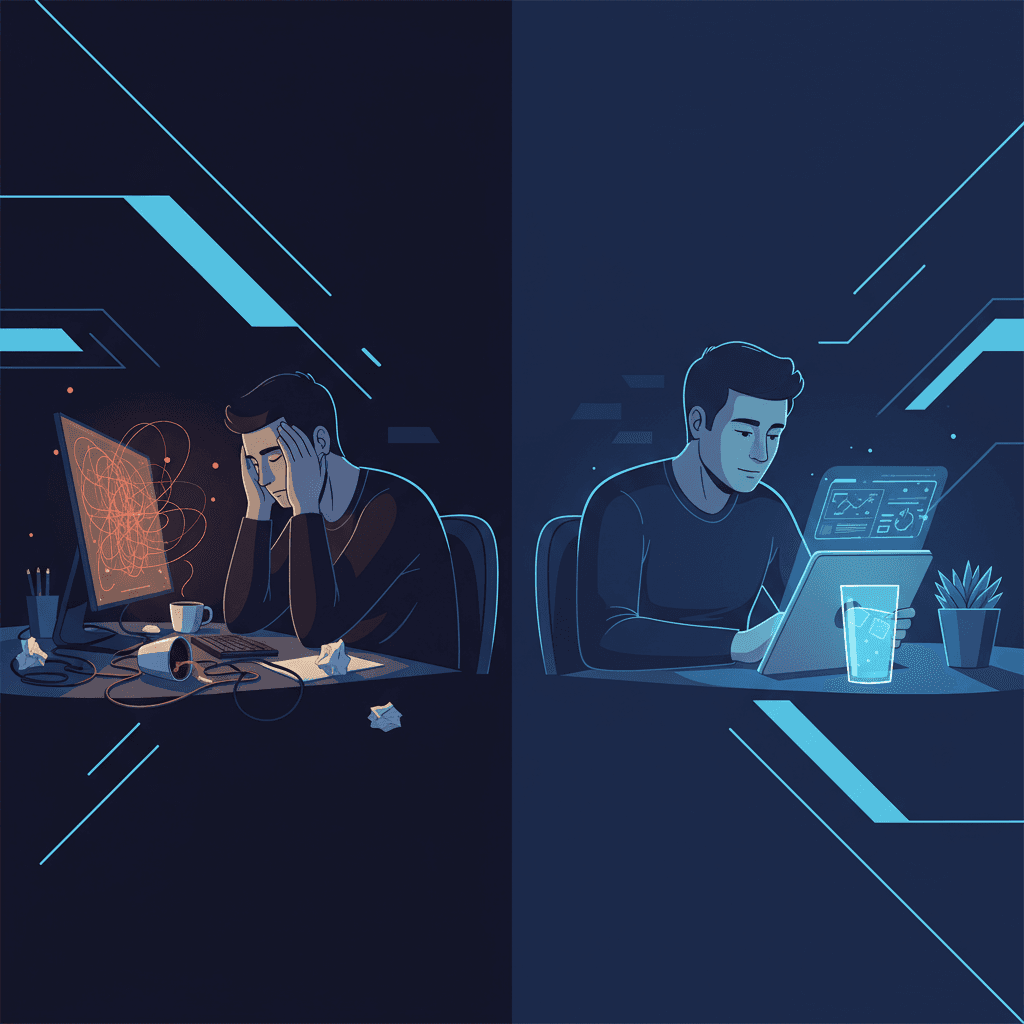
That 2 PM meeting where everyone looks checked out? The brainstorming session that goes nowhere? The emails that take three rewrites to make sense?
Your team might not be lazy. They might be thirsty.
The Hidden Performance Killer
I sell water systems for a living, so take this with appropriate bias. The science here is smaller and more careful than the wellness headlines make it sound, so I'll cite the actual studies.
In a University of Connecticut study, mild dehydration of about 1.4% of body mass degraded mood, concentration and perceived task difficulty, and increased headache, in healthy young women. A companion trial in men found working memory, vigilance and mood suffered at about 1.5% dehydration. We're not talking about desert-level dehydration. That is the difference between having your morning coffee and forgetting to drink water until lunch.
A percent and a half is a normal workday's drift for someone who skipped water until lunch. Your team can be that far down and not know why the afternoon feels heavy.
The Coffee Trap
Every office has endless coffee, and the usual line is that coffee dehydrates you. The evidence says otherwise for regular drinkers: a crossover trial in 50 habitual coffee drinkers found four cups a day hydrated them about as well as the same volume of water. So coffee counts. The trap is not the coffee, it is that coffee is often the only thing on offer, and nobody drinks eight cups of it.
I walk into breakrooms every day. Coffee makers everywhere. Water? Maybe a sad water cooler in the corner that nobody maintains. Or worse — just telling people to drink from the tap when the municipal water tastes like chlorine and metal.
What Good Hydration Actually Does
When researchers took people who habitually drank under 1.2 litres a day and moved them to 2.5 litres for three days, their mood, sleepiness and fatigue scores improved; cutting habitual high drinkers down to 1 litre made theirs worse. That is a few extra glasses across a workday. Not a massive lifestyle change.
Across those studies the measures that moved were:
- Concentration and vigilance
- Working memory
- Mood and calmness
- Fatigue and sleepiness
- Headache
Those are the exact things that make teams more productive. The exact things that make meetings actually useful.
Why Most Office Water Fails
The problem isn't just access. It's quality. Municipal water varies by season. Treatment plants change their processes. What comes out of your tap in April doesn't taste the same as January water.
Bad-tasting water means people drink less water. They grab soda instead. Or more coffee. The cycle continues.
Most offices treat water like an afterthought. Install the cheapest cooler. Buy the cheapest bottles. Wonder why nobody uses it.
The Real Cost
You're spending thousands per employee on health insurance, wellness programs, and productivity tools. Nobody has put a dollar figure on office dehydration that I would trust enough to print, and I won't invent one. But the direction is not in doubt: the same people, a percent or two drier, concentrate worse, tire faster and are more irritable in meetings.
In Madison the city's wells draw from a deep sandstone aquifer and the utility's own report says the water meets every federal and state standard, but mineral content and taste vary well to well, and an office that finds its tap water hard or flat quietly drinks less of it.
Every conference room should have water that people actually want to drink. Every desk should have easy access to quality hydration. This isn't a nice-to-have. It's basic infrastructure for brain function.
Beyond Just Water
The best offices I see don't just provide water. They provide options. Sparkling water for people who crave bubbles. Flavored water for people who find plain water boring. Ice-cold water because temperature matters for consumption.
Make hydration easy and appealing. People will drink more. They'll think clearer. They'll perform better.
Your team's brain fog might just be thirst. The solution is simpler than you think.